


We have all heard the parable of the wise man who built his house on rock and the foolish man who built his house upon the sand. When the rains descended, the floods came and the winds blew and beat upon those houses, the one built on rock was left standing.
Now whilst much of London is actually built on clay, it has managed to withstand the rains, floods and winds that have battered it for more than a decade. In fact, it has felt like a perpetual storm: Stamp Duty, Brexit, endless tax reform, political instability, COVID, rising interest rates, elections, conflict in the Middle East and now yet more political chaos at home. We have seen the arrival of US style brokerages and their Instagram reels and reality shows. Negative commentary has become so constant that the noise itself has become the narrative.
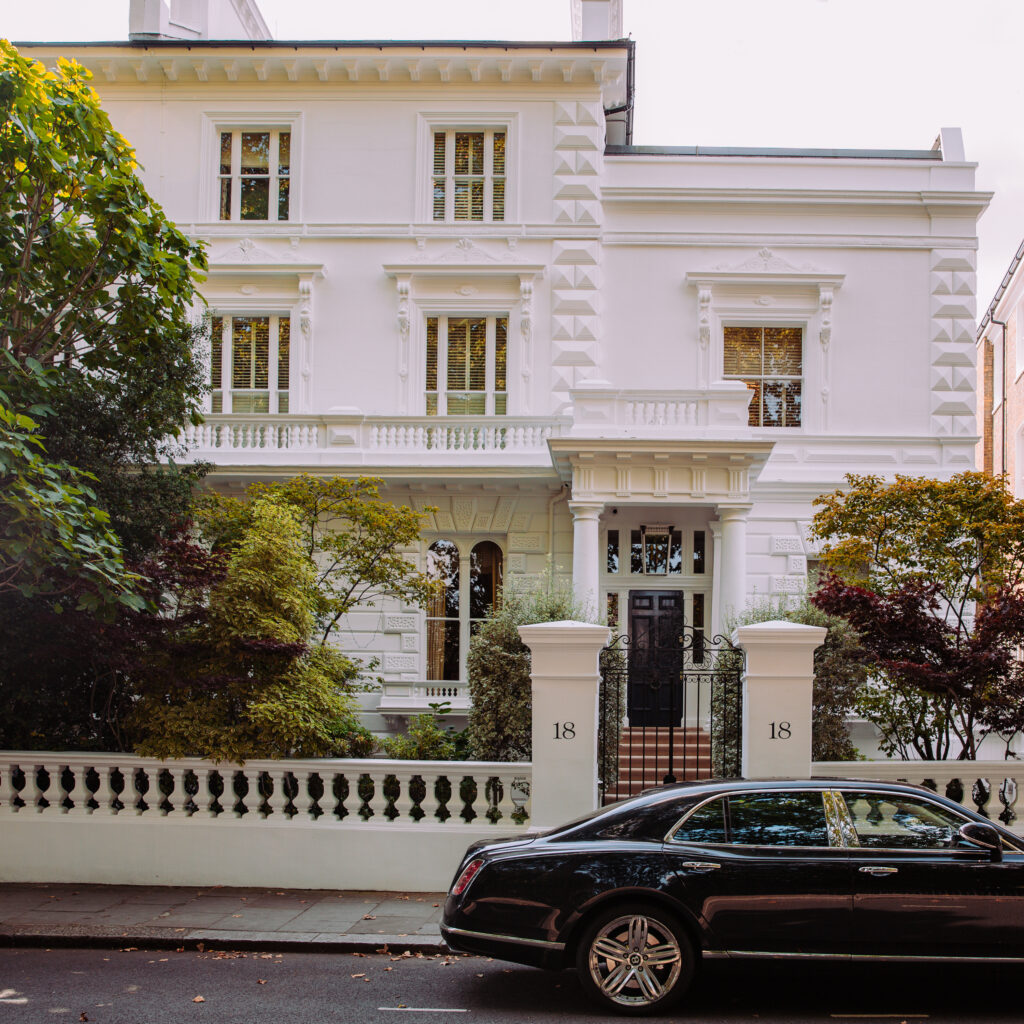
Stable foundations
And yet, London holds firm and resilient, since beneath that impermeable London Clay lies a layer of bedrock that provides the foundations for a market that is surprisingly stable. The same beautiful streets and garden squares continue to reign. The same scarcity of quality and style persists. Buyers still covet best-in-class houses and apartments and find themselves bidding competitively, notwithstanding the wider market mood.
That being said, we do not come out unscathed. Buyers are undoubtedly more cautious amidst a seemingly fragmented market. Deals are taking longer to put together and terms are more fiercely and defensively negotiated. There is less predictability in behaviour and outcomes, and due diligence matters more than ever.

Q1: data versus reality
So whilst it’s tough, and notwithstanding all the noise and commotion, our market has continued to transact. According to our proprietary data, where we track all transactions in London over £10m, we recorded 32 transactions in Q1 2026, which is a surprising increase on the same period last year. In fact, it’s the 4th highest Q1 since the high watermark of 2014 and even higher than the 5-year average, which includes the post-pandemic property boom. We have also witnessed the highest value transaction ever recorded, with the acquisition of Providence House in Chelsea for c.£270m, and a handful of other extremely significant trades in the pipeline.
Nearly 80% of the transactions were period properties rather than new build – a slight increase on previous quarters and perhaps reflecting the planning challenges for that market. 75% were houses and nearly 70% were in good or turnkey condition, continuing a trend we have seen since 2020. Buyers remain loathe to take on full scale projects, especially in listed buildings.
Domestic and US buyers continue to dominate, as does cash. We advised on two high value transactions last year involving leverage and high LTVs (for differing reasons) and expected that to be continued into 2026. However, current market uncertainty around interest rates appears to have dampened that trend for now.
We have been reflecting on this data, and how it seems slightly at odds with the narrative in the press and the mood amongst many of the top sales agents in our industry. Looking at the property specifics, we conclude that whilst the stats portray a strong period of ‘normal’ trading, the truth is that a substantial portion of the trades in this period involve what we would consider to be the leftover ‘rump’; properties that have languished on the market in recent months and years (a large swathe in St. Johns Wood and Regents Park, interestingly) and finally seller expectations and buyer confidence have aligned with the Autumn Budget put to bed. We were fascinated to observe that 22 out of the 32 transactions traded for sub £2,500/sq.ft, having chased the market down! The same is certainly true of the majority of trades that took place in the new build schemes, where developers finally showed willingness to soften on price.
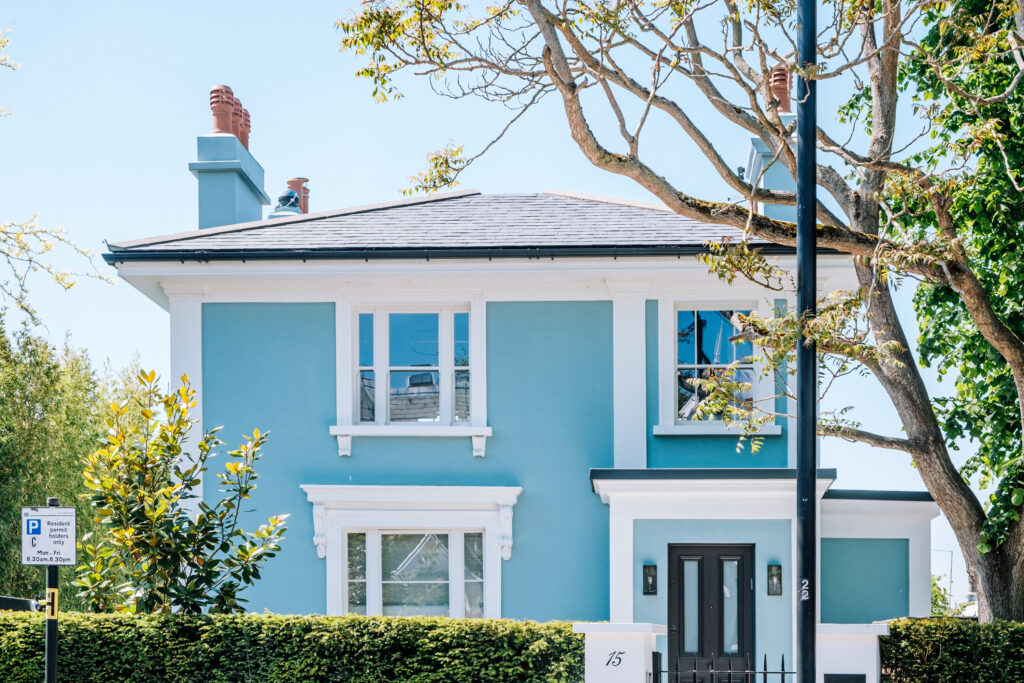
At face value
The trading data above shows once again how critical it is to understand values, which continue to be very property- and area-specific, with unique one-off assets achieving extraordinary premiums, best-in-class assets holding up on peak values, and compromised properties seeing downward movement amidst a new wave of realism.
This nuance is never reflected in the headline data with the generic indices suggesting negligible movement over the last 12 months. We have seen data that suggests average discounts to asking prices are widening but we have never relied on that as an indicator. In our market, asking prices are so arbitrary that such data can be skewed by only a handful of transactions. It certainly should never be used as the basis for opening negotiations: not only does it just become a self-fulfilling prophecy, but it also has no basis in fact. There are, in addition, always stories of distress, and properties trading for half the asking price (it’s a constant proposition we hear) but these are either mythical transactions or trades that reflect the asset’s true value. We continue to urge caution in these circumstances. There are some highly distressed assets in the market where we don’t see any value at any price.

Looking ahead
As ever, best-in-class properties remain scarce and take time to unearth. In general, stock levels remain constrained in prime areas of London. We had expected this to improve as the Spring market begins in earnest but with continuing uncertainty around interest rates, energy prices, inflation and political chaos, we sense that sellers may be unsure if this is the right moment. Certainly, the latest RICS Residential Market Survey (which tracks sentiment across the UK mainstream market rather than prime) notes this concern and suggests a potential slowdown in new properties coming to the market.
Whilst the UK mainstream market is likely to take a pause as buyers wait to see the direction of interest rates, we sense our market will continue to quietly transact despite all the noise. New arrivals continue to be drawn to the UK, with a good swathe from the US as is customary, but also from more varied geographies as the new FIG regime is proving attractive. This is not least because FIG income isn’t taxed for the first four years, and in that time we will have an election – and quite possibly a new government and new direction (certainly, that is a refrain we hear a lot). If that is true, then those who believe now is a good time to buy may be rewarded (as those who transacted ahead of the Autumn Budget were similarly rewarded). Meanwhile we, and the leading sales agents in the market, have been interested/pleased/comforted to see that there are more credible, represented buyers (largely domestic Brits) at the very top end of the market (£50m++) than we have seen for some time.
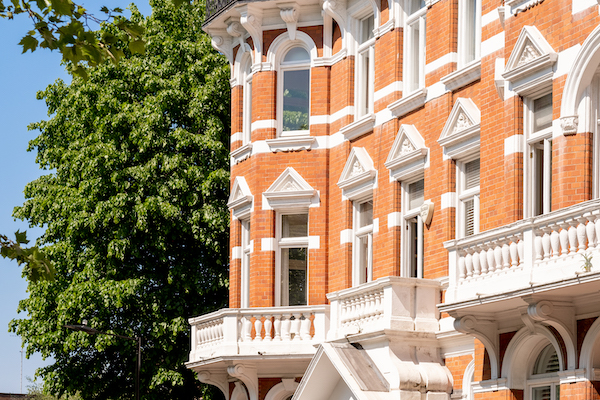
Buyers value discretion
Perhaps in related news, one trend that we are seeing is genuine concern around privacy from buyers. Not long ago, reality shows and influencers looked set to take over our world, but that threat has dissipated. Buyers value privacy above all else, and they are introduced to us specifically because they know we will protect theirs rigorously. In turn, we know the ecosystem that we can trust within London, and firms that have put their social media followings ahead of their clients’ privacy are now paying the price. For us, there was a time when we worried that our stance on confidentiality might be outdated, but I am thrilled that by sticking to our guns this has now become a widely acknowledged strength rather than a nod to a bygone era.
Occasional cracks but nothing structural
Overall, we expect our market to continue to perform in line with previous years. Of course, like the London Clay atop which it sits, our market ebbs and flows (shrinks and expands) with the weather. We might see shrinkage if the political chaos ensues, or expansion if the Middle East conflict endures. Thankfully, I am told by those in the know that the expansion and shrinkage of our London Clay almost never results in structural instability or the danger of collapse. Perhaps we should all be thankful that London was built on a solid bedrock!